
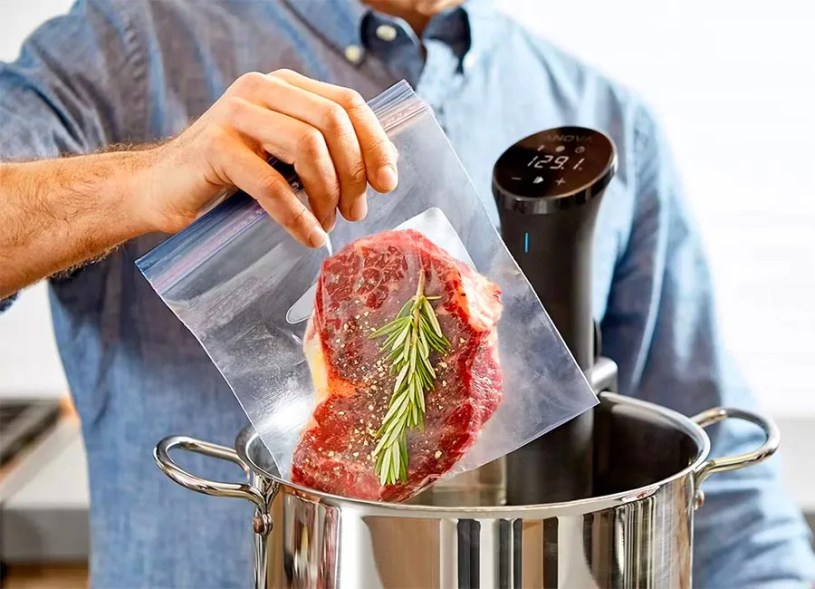
Sous vide cooking has gained immense popularity among both professional chefs and home cooks in recent years. This precise cooking technique, which translates to “under vacuum” in French, involves sealing food in airtight bags and cooking it slowly in a water bath at a controlled temperature. While it may seem like a modern culinary trend, sous vide has been used for decades, primarily in fine dining establishments. Let’s explore the science behind this technique, its benefits, potential drawbacks, and whether it’s worth incorporating into your cooking repertoire.
Understanding the Sous Vide Process
At its core, sous vide cooking is all about precision and control. The process begins with placing seasoned food—such as meat, vegetables, or even eggs—into a vacuum-sealed bag. This bag is then submerged in a water bath heated to a specific temperature, typically much lower than traditional cooking methods. For instance, a steak might be cooked at around 130°F (54°C) for several hours, depending on the desired doneness.
The science lies in the way heat transfers through the water. Water is an excellent conductor of heat, allowing the food to cook evenly throughout without the risk of overcooking. Because the temperature is set lower than conventional cooking methods, the food retains more moisture and flavors, resulting in a tender and juicy final product.
Benefits of Sous Vide Cooking
- Precision and Consistency: One of the primary advantages of sous vide cooking is the ability to cook food to the exact temperature you desire. This means you can achieve perfectly cooked results every time, eliminating the guesswork associated with traditional cooking methods.
- Enhanced Flavor and Moisture: Because food is vacuum-sealed, it cooks in its own juices. This method locks in flavors and moisture, resulting in dishes that are not only more flavorful but also juicier than those prepared using conventional methods.
- Nutrient Retention: Cooking at lower temperatures helps preserve nutrients that can be lost during high-heat cooking. Sous vide techniques can lead to healthier meals without sacrificing taste.
- Convenience: Sous vide cooking allows for flexibility in meal prep. Once the food is in the water bath, you can leave it unattended for hours. This is especially useful for busy cooks who want to set it and forget it.
- Less Kitchen Mess: With minimal pots and pans involved, the cleanup is straightforward. The vacuum-sealed bags can be discarded after use, leaving you with fewer dishes to wash.
Potential Drawbacks
- Time Investment: While sous vide cooking allows for unattended cooking, it does require a longer cooking time than traditional methods. Some cuts of meat, for instance, can take several hours to reach the desired temperature.
- Special Equipment Required: To get started with sous vide cooking, you need a vacuum sealer and an immersion circulator or sous vide machine. While prices have come down, initial investment may be a consideration for some home cooks.
- Lack of Maillard Reaction: The Maillard reaction, which is responsible for the browning and flavor development in cooked foods, doesn’t occur at the lower temperatures used in sous vide. This means that food cooked sous vide may lack the crispy, browned exterior that many people enjoy. To address this, it’s often recommended to sear meats in a hot pan after sous vide cooking to achieve that coveted crust.
- Safety Concerns: Although sous vide is generally safe, improper handling of food can lead to bacterial growth. It’s essential to maintain proper hygiene, use food-safe bags, and cook food at safe temperatures to mitigate risks.
Is It Worth It?
Whether sous vide cooking is worth incorporating into your kitchen depends on your culinary goals, preferences, and lifestyle. If you value precision, consistency, and flavor, and you enjoy experimenting with new cooking techniques, sous vide may be a worthwhile addition.
For home cooks who frequently prepare steak, chicken, or vegetables, the ability to achieve perfect doneness without the risk of overcooking can be transformative. On the other hand, if you prefer quick meals or lack the patience for longer cooking times, traditional methods may be more suitable.
Conclusion
Sous vide cooking is a fascinating technique that combines science and culinary art. By understanding its principles, benefits, and limitations, you can make an informed decision about whether it’s the right fit for your cooking style. Whether you’re looking to impress guests at a dinner party or simply elevate your weeknight dinners, sous vide cooking offers a unique way to explore flavors and textures in your food. With the right tools and a bit of practice, you may find that this method unlocks new culinary possibilities in your kitchen.
 Live Life News